


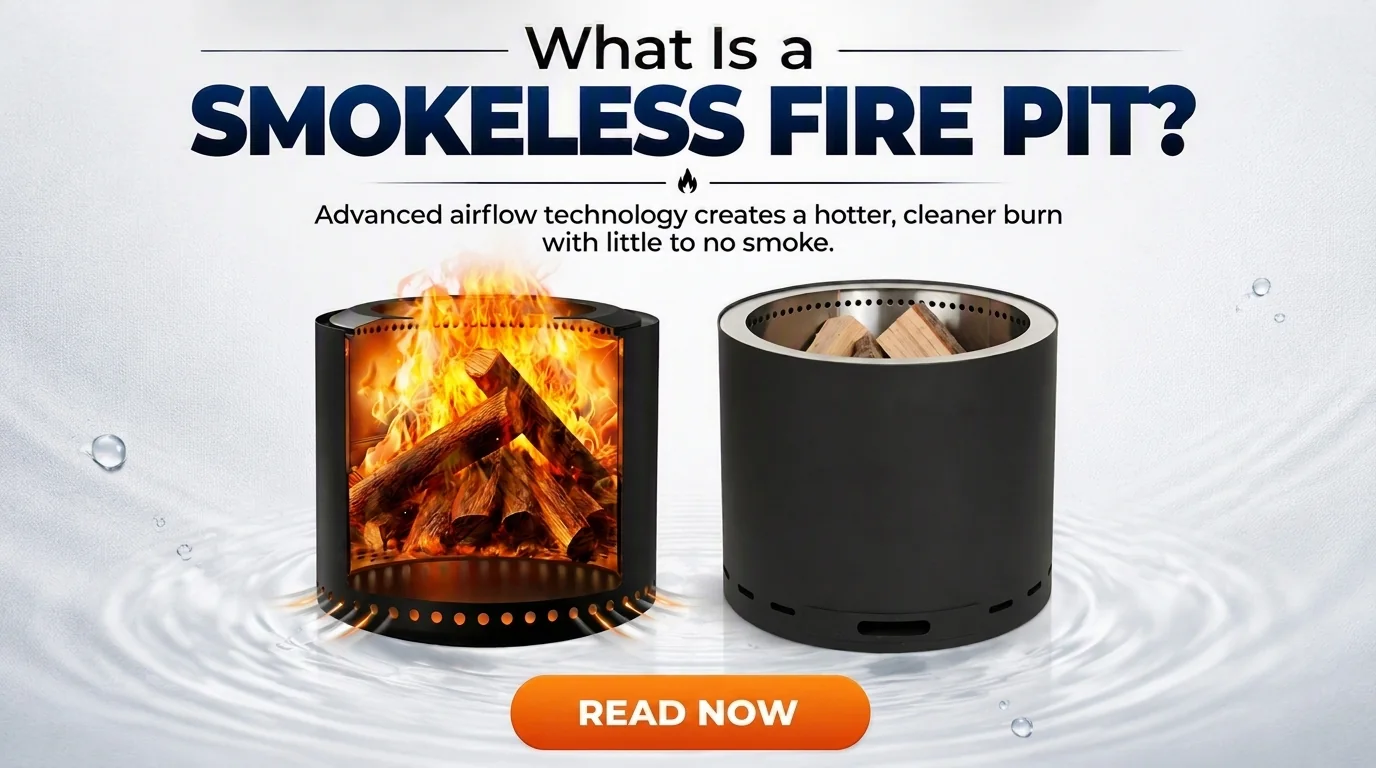
What Is a Smokeless Fire Pit?
Double-wall airflow, secondary combustion, size selection, fuel choice, maintenance, and safe use.
A smokeless fire pit is an outdoor wood-burning fire pit designed to reduce visible smoke by controlling how air enters the combustion chamber. Its defining feature is not simply a double wall; it is the airflow system created by that structure.
Fresh air enters through lower openings, travels through the gap between the inner and outer walls, heats up, and re-enters near the top of the fire. This preheated secondary air helps burn combustible gases that would otherwise leave the fire as visible smoke.
1. How Does a Smokeless Fire Pit Work?
Traditional fire pits rely mainly on natural airflow around the fire. A modern smokeless fire pit uses a double-wall structure and a controlled airflow path to support both primary and secondary combustion.
The goal is to create better conditions for more complete combustion. “Smokeless” therefore describes a reduction in visible smoke under proper operating conditions; it does not mean that combustion can never produce smoke.
2. What Is the Double-Wall Structure?
The double-wall structure is a key part of the airflow system. It normally includes an inner combustion wall, an outer structural wall, an air gap between them, lower air inlets, and upper secondary-air outlets.
- Inner wall: forms the main combustion chamber.
- Outer wall: provides the external structure and protection.
- Air gap: creates a channel that carries air upward.
- Lower air inlets: allow fresh air into the system.
- Upper air outlets: introduce preheated air into the upper combustion zone.
As the fire burns, incoming air moves upward through the wall cavity and is heated by the hot inner wall. The preheated air then enters the top of the combustion chamber, where the additional oxygen helps burn gases released from the wood.
3. Why Does Secondary Combustion Reduce Smoke?
When wood is heated, it releases combustible gases. In a conventional open fire, some of these gases may leave the combustion area before they are fully burned, creating visible smoke. A smokeless fire pit supplies additional preheated air where those gases collect, helping them burn again.
| Feature | Traditional Fire Pit | Smokeless Fire Pit |
|---|---|---|
| Structure | Mainly single-wall / open | Double-layer structure |
| Air supply | Natural / open airflow | Primary + secondary airflow |
| Combustion | Mainly primary combustion | Primary + secondary combustion |
| Air preheating | No dedicated system | Yes |
| Visible smoke | Relatively higher | Significantly reduced under proper conditions |
| Fuel efficiency | More variable | Generally improved |
4. Smokeless Fire Pit Size Guide
Size affects fuel capacity, heat coverage, portability, and the number of people who can comfortably gather around the fire. For the Kingjoy Forge 6834 series, four diameters are available for different use cases.
| Size | Approx. Diameter | Recommended Users | Typical Application |
|---|---|---|---|
| Small | 38 cm | 2–3 people | Patio, small garden, family use |
| Medium | 49 cm | 4–6 people | Family gatherings, residential gardens |
| Large | 63 cm | 7–9 people | Large gardens, outdoor entertaining |
| XL | 71 cm | 10+ people | Large gatherings, hospitality and commercial spaces |
The best size balances fire capacity, heat coverage, fuel consumption, portability, and user capacity. The largest model is not automatically the best choice for every location.
5. Fuel Selection and Proper Use
Dry Firewood
Dry hardwood is recommended because it supports efficient combustion and helps the fire reach the temperature needed for secondary combustion. Use wood with a moisture content of approximately 20% or below.
Wet wood can make ignition more difficult, lower combustion temperature, destabilize the flame, and increase smoke.
Wood Pellets
Wood pellets can be used in fire pits specifically designed to accommodate them. Their consistent size and relatively low moisture content can make feeding, storage, and heat output more predictable.
| Fuel | Main Characteristics | Suitable Application |
|---|---|---|
| Dry firewood | Natural flame, longer individual burn cycles, traditional experience | Outdoor gatherings and traditional campfire-style use |
| Wood pellets | Consistent size, compact storage, stable and controllable combustion in compatible designs | Convenient heating and controlled burning |
6. Maintenance
- Remove ash after complete cooling. Excess ash can restrict airflow through the lower part of the fire pit.
- Keep the air openings clear. Lower intake, double-wall channel, and upper outlets all need an unobstructed airflow path.
- Inspect the surface. High-temperature use can change metal appearance; care requirements depend on stainless steel, powder-coated steel, or weathering steel.
- Protect the product when appropriate. A suitable cover can reduce prolonged exposure to rain and moisture.
7. Safety Considerations
A smokeless fire pit is still a high-temperature, open-flame appliance. Use it outdoors in a suitable ventilated location, do not overload it with fuel, account for wind that may carry sparks or embers, and never leave the fire unattended.
After use, allow the fire pit and embers to cool completely before removing ash, moving the unit, or storing it.
Planning a smokeless fire pit range?
Discuss diameter, material, airflow structure, target market, quantity, and packaging requirements with our B2B team.