


Original design & manufacturing
OEM & ODM
Fire Pit Manufacturing
Your product idea.
A practical route to production.
From a private-label model to a new outdoor fire or cooking product, start with the design, reference or technical brief you have.
For brands, retailers, importers and distributors.
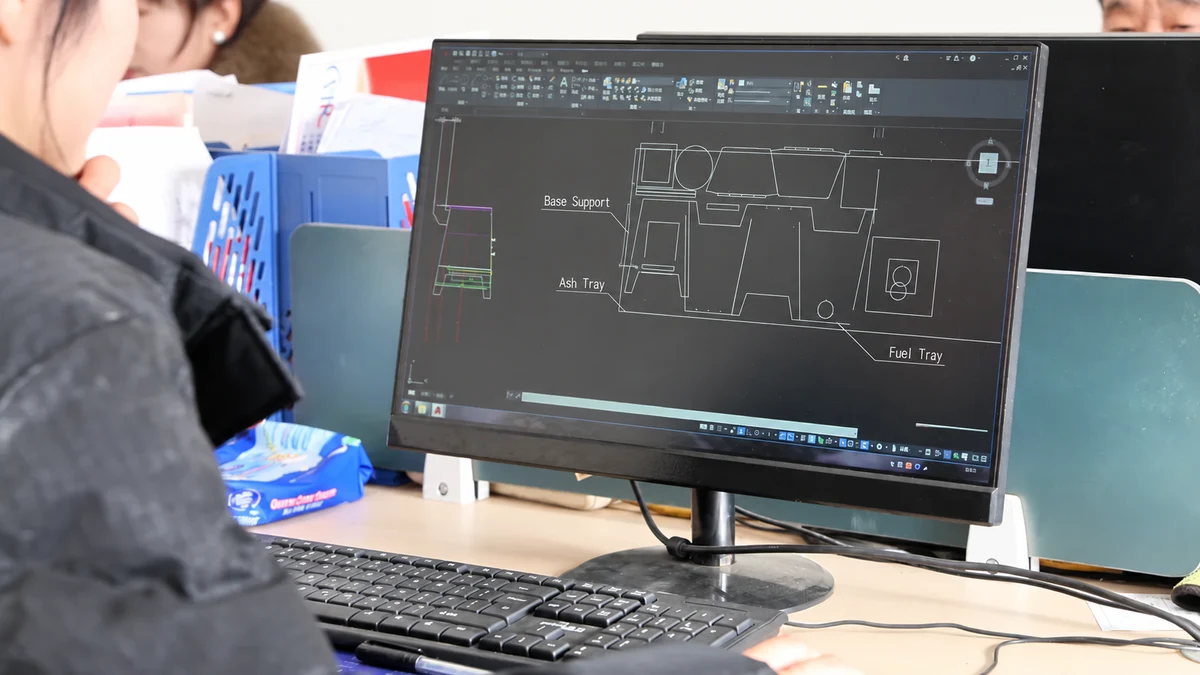
01 / Choose your starting point
What do you already have?
A catalog reference, a product to adapt, an idea or completed drawings. Each calls for a different development conversation.
Private Label
You have a brand and need a product range.
- Start with
- A catalog model and your sales channel.
- Discuss
- Branding, finish, accessories and packaging options for the selected model.
Product Modification
You have a reference and need specific changes.
- Start with
- An existing model and a list of required changes.
- Discuss
- Dimensions, materials, finish and construction, including their effect on sampling and cost.
ODM Development
You have an idea that needs engineering.
- Start with
- A sketch, reference images or a product brief.
- Discuss
- Product function, structure, materials and the prototype review needed before production.
Build to Print
You have drawings ready for a manufacturing review.
- Start with
- Drawings, material specifications and quantity requirements.
- Discuss
- Tolerances, processes, inspection points, packaging and production feasibility.
02 / Selected project work
Real projects.
The details that made them different.
Examples of product development and adaptation work. Customer names, logos and identifying project images are withheld to protect confidentiality.
Function & construction
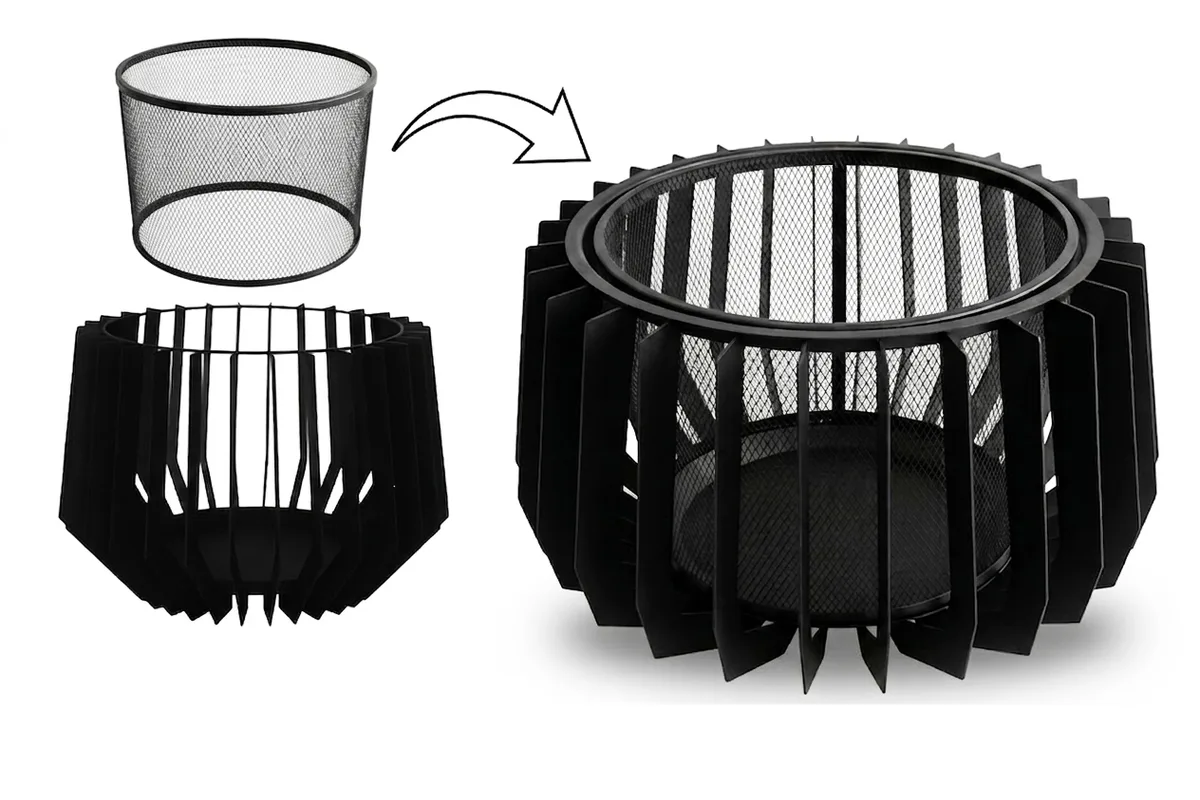
Adding an inner mesh to a fire basket.
An existing fire basket was adapted with an inner mesh component. The illustration shows the added insert and its position within the surrounding structure.
- The modification
- A mesh liner fitted inside the basket while retaining the outer product form.
- What this demonstrates
- A component-level change to an existing product, rather than a completely new platform.
- For a similar project, review
- Mesh specification, fit, fixing method, heat exposure and the applicable testing requirements.
Structural adaptation
A cart-mounted fire bowl
- Project direction
- Adapt a fire bowl around a customer's cart concept.
- Work shown
- A supporting frame, handles and wheel assembly integrated around the bowl.
- For your brief
- Define the intended use, dimensions, handling conditions and packaging requirements.
Finish development
A custom Gunmetal Grey finish
- Project direction
- Develop a distinct powder finish for an outdoor brand's product.
- Work shown
- Collaboration on a Gunmetal Grey finish for the selected fire pit.
- For your brief
- Provide a colour reference, base material, texture and intended heat exposure.
Co-development
Firewood storage for a brand
- Project direction
- Co-develop a firewood holder with a tool brand.
- Work shown
- Shaped side panels and product-integrated artwork reflecting the brand's identity.
- For your brief
- Bring approved artwork, target dimensions, material requirements and the desired presentation.
These summaries describe project scope. Specifications, testing, minimum quantities and development schedules are agreed separately for each new project.
03 / From brief to production
Make the next decision clear.
Confirm the product and its acceptance requirements in stages. Development and production timing depend on the work needed at each stage.
- 01
Brief & Feasibility
Review the reference, intended use, target market, quantities and technical requirements.
Decision: agree the development scope. - 02
Design & Sampling
Review drawings, materials, finish and sample requirements for the selected approach.
Decision: confirm what the sample must demonstrate. - 03
Review & Approval
Check the sample against agreed specifications, packaging and applicable testing requirements.
Decision: approve the specification or define revisions. - 04
Production & Inspection
Manufacture to the agreed specification, with inspection and shipment requirements confirmed for the order.
Decision: confirm the order and delivery arrangements.
Connect product design with manufacturing.
Explore the factory processes and quality checks behind your project.
04 / Prepare your enquiry
A useful brief.
A better starting point.
You do not need a finished technical package to begin. Share what you have and identify the decisions still open.
Send Your Project BriefInclude what you can
- Product: a catalog model, photo, sketch or drawing reference.
- Requirements: dimensions, materials, function, finish and branding.
- Market: destination, sales channel and any known testing requirements.
- Order: estimated quantities, packaging needs and target timing.
The enquiry form accepts a PDF, image, Word or Excel reference up to 10 MB. For CAD files, email our team.
Before you enquire
OEM & ODM questions
Have a product-specific question? Include it in your brief.
What is the difference between private label, OEM and ODM?
Private label starts with an existing product and agreed branding options. A build-to-print OEM project starts with your design or drawings. ODM development starts earlier, with a concept or brief that needs product engineering. We confirm the scope for your project before proceeding.
Can I begin with a sketch or a reference product?
Yes. Share the intended use, reference images and the changes you want. These provide a starting point for discussing dimensions, materials, feasibility and sample requirements.
What are the minimum order quantity and lead time?
They depend on the model, materials, finish, tooling, packaging and order quantity. Catalog-based projects and new designs can have different requirements. Request confirmation for your selected product and scope.
How are samples and testing handled?
Sample scope, costs, timing and approval requirements are discussed for each project. Tell us your destination market and intended use so that applicable product testing and documentation can be reviewed. Reports and approvals are specific to the product and their stated scope.
Can you review confidential designs?
Contact us to agree confidentiality arrangements before sending sensitive drawings or proprietary details. You can begin with a non-confidential description of your project.
Your next product starts here
Tell us what you want to make.
Our team will review your requirements and discuss the next development or sourcing step.