


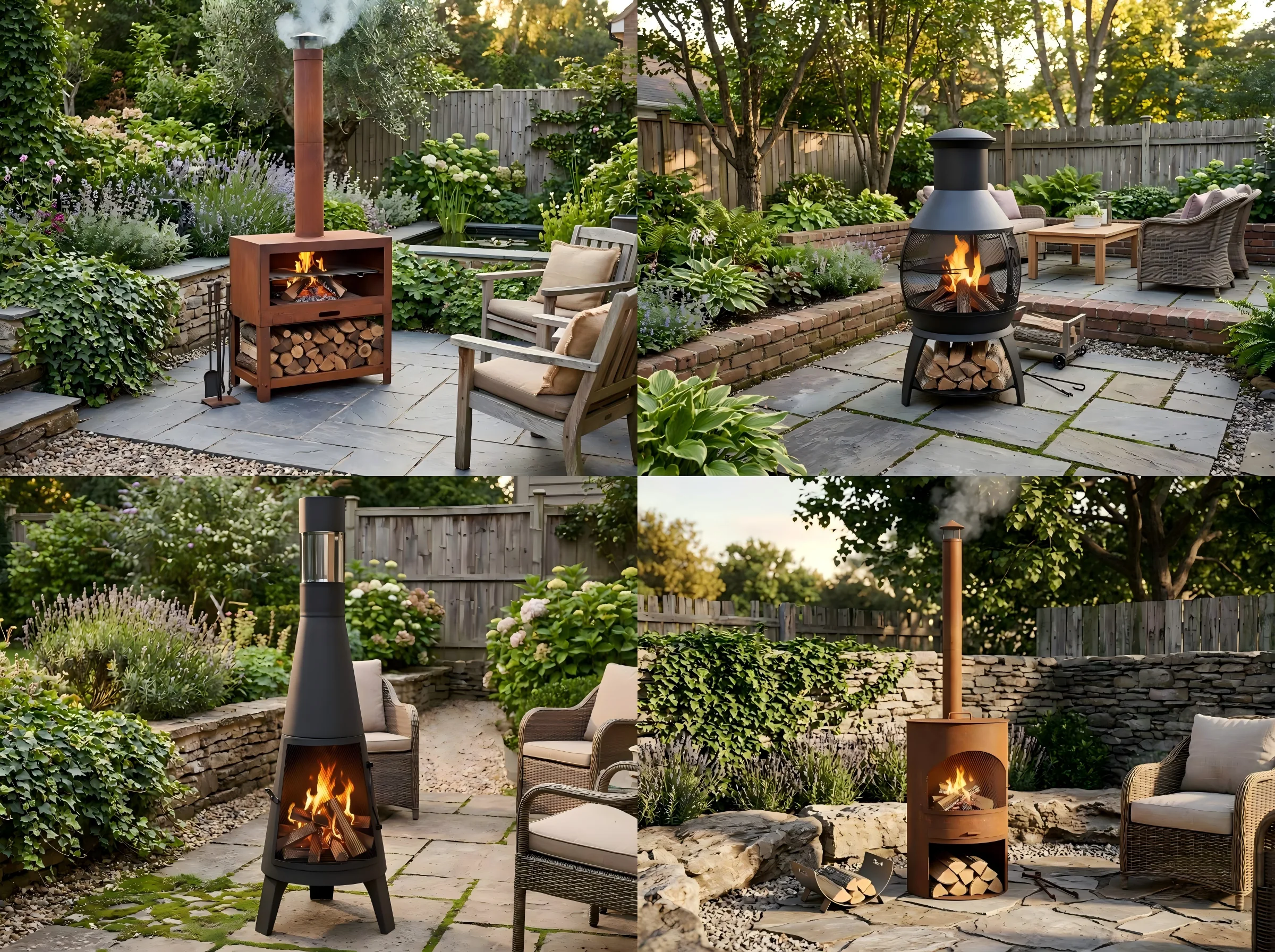
How to Choose the Right Outdoor Fireplace
A practical framework for materials, shape, size, transport, maintenance, and safe outdoor use.
Choosing an outdoor fireplace involves more than appearance or price. Material, shape, size, weight, intended use, packaging, maintenance, and safety all affect whether a fireplace is suitable for a particular garden, patio, retail program, or hospitality setting.
Define the intended use first, then assess the available space. Choose a suitable size, compare materials, evaluate weight and transportation, review maintenance needs, and confirm safe placement and local fire rules before purchase.
1. Compare Outdoor Fireplace Materials
Material affects durability, heat behavior, weight, corrosion resistance, maintenance, and overall service life.
| Material | Main Characteristic | Selection Consideration |
|---|---|---|
| Cast iron | Strong construction and good heat retention | Heavy, traditional feel; weight is a major transport and mobility consideration |
| Steel | Balance of strength, weight, design flexibility, and cost | Thickness, coating quality, drainage, rain, and humidity affect durability |
| Stainless steel | Higher corrosion resistance than conventional carbon steel | Suitable for humid or coastal settings but usually carries higher material cost |
| Clay / ceramic | Traditional chiminea appearance and heat retention | More fragile and more susceptible to cracking from sudden temperature changes or freezing |
There is no single material that is universally best. Traditional aesthetics may favor ceramic, heavy-duty heat retention may favor cast iron, a balance of manufacturability and cost may favor steel, and stronger corrosion resistance may favor stainless steel.
2. Choose the Right Shape
Shape affects heat distribution, airflow, smoke direction, fire visibility, cooking access, stability, and how much floor area the product occupies. Traditional chimineas use a rounded fire chamber and narrow chimney to contain the fire and direct smoke upward.
| Shape / Structure | Main Characteristics | Most Suitable For |
|---|---|---|
| Round / Chiminea | Compact enclosed fire chamber, upward smoke direction | Small gardens, patios, personal relaxation |
| Rectangular | Wider fire opening and broader visual field | Larger gatherings and modern gardens |
| Square | Compact footprint with relatively stable structure | Patios and limited outdoor spaces |
| Tall / Vertical | Smaller floor footprint and strong upward airflow | Narrow gardens and space-saving applications |
| Wide / Low | Larger fire area and stronger visual presence | Social gatherings and entertaining areas |
3. Match Size and Weight to the Space
A fireplace that is too small may not provide the desired fire capacity, while an unnecessarily large model uses more space and fuel and is harder to transport. Consider the available outdoor space, expected number of users and the primary purpose of the fireplace.
| Product Size | Weight Category* | Recommended Users | Typical Application |
|---|---|---|---|
| Small | Light | 2–4 people | Balcony-sized outdoor areas, small patios, personal use |
| Medium | Medium | 4–6 people | Family gardens and regular outdoor gatherings |
| Large | Heavy | 6–10 people | Larger gardens, entertaining and social gatherings |
| Extra Large | Heavy / Very Heavy | 8–12+ people | Large outdoor spaces and commercial / hospitality applications |
*The source guide treats these as general categories rather than exact product weights. Actual weight depends on material, wall thickness, structural reinforcement, and accessories.
4. Packaging and Transportation
Outdoor fireplaces can occupy substantial shipping volume even when their physical weight is moderate. For e-commerce, retail, import, and distribution programs, gross weight and volumetric efficiency should both be evaluated.
A detachable or knock-down structure can reduce carton dimensions, transport volume, warehouse space, and container usage while simplifying delivery. Detachable chimneys, legs, and other components still need robust connection points so packaging efficiency does not compromise assembled stability.
5. Maintenance
- Ash removal: remove ash only after the fire has completely cooled.
- Surface cleaning: remove soot and dust periodically using methods appropriate for the product finish.
- Structural inspection: check rust, cracks, welds, fasteners, handles, legs, chimney sections, and spark screens.
- Weather protection: reduce prolonged exposure to rain and humidity and avoid water accumulating in the fire chamber.
6. Safety Is a Core Selection Criterion
Outdoor fireplaces produce high temperatures, flame, smoke, and embers. Install the unit on a stable, level, non-combustible surface and maintain clearance from combustible structures, vegetation, furniture, fences, and overhead materials. Check local rules because restrictions on recreational outdoor fires vary by location.
For wood-burning fireplaces, use dry seasoned wood; aim for a moisture level of approximately 20% or less. Avoid plastic, household garbage, pressure-treated wood, composite materials, and painted or chemically treated wood.
Do not overload the fireplace. Use suitable spark control where applicable, keep children and pets away from hot surfaces, and remember that the exterior can remain hot after the visible flame has gone out.
7. A Practical Decision Framework
The right fireplace is not necessarily the largest, heaviest, or most expensive. It is the model whose structure, materials, size, and intended application best fit the actual environment.
Developing an outdoor fireplace range?
Share your target market, design direction, material, dimensions, packaging goal, and estimated order quantity.